
Iran vs. the West: Pezeshkian's Dire War Warning
Masoud Pezeshkian, 2018. Photo courtesy of Mohammad Hossein Velayati under CC BY 4.0.
Iranian President Masoud Pezeshkian has dropped a bombshell claim that his country is locked in a "total war" with the United States, Israel, and Europe. The declaration comes amid a backdrop of military strikes, diplomatic pressure, and economic sanctions that have pushed tensions to a boiling point. But what does this mean for the fragile balance in the Middle East and beyond? And how does this rhetoric stack up against the realities on the ground?
A War Unlike Any Other
Iranian President Masoud Pezeshkian did not mince words in interviews published on state media platforms. He said the conflict Iran faces today is far more complex and difficult than the brutal Iran-Iraq war of the 1980s. Unlike that earlier conflict, where missile strikes were clear and responses targeted, Pezeshkian said Iran is now "being surrounded from every angle" and besieged politically, culturally, and economically by Western powers, as reported by the Express.
He described the situation as a "total war" with the U.S., Israel, and Europe, accusing these powers of wanting to bring Iran "to its knees," as reported by Fox News, citing The Times of Israel. This is a significant escalation in official rhetoric, signaling a shift from isolated military skirmishes to a broader confrontation that encompasses multiple fronts.
The Toll of Recent Strikes
The backdrop to Pezeshkian's statement includes a series of devastating airstrikes earlier in the year. In June, Israel launched a 12-day war against Iran, targeting nuclear facilities with the support of U.S. airstrikes. These strikes reportedly obliterated key nuclear enrichment sites, including Fordow, Natanz, and Isfahan, severely damaging Iran's nuclear program.
The fighting resulted in approximately 1,100 deaths in Iran, including senior military commanders and nuclear scientists. Iranian missile attacks in retaliation killed 28 people in Israel. Despite the heavy losses, Pezeshkian claimed Iran's military emerged stronger, boasting improved equipment and manpower compared to before the attacks.
Political Timing and Diplomatic Moves
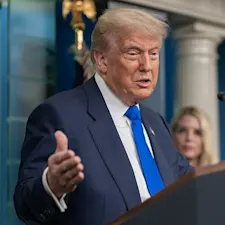
The timing of Pezeshkian's declaration is notable. It was released just days before a high-profile meeting between Israeli Prime Minister Benjamin Netanyahu and U.S. President Donald Trump at Mar-a-Lago. Netanyahu is expected to push for new strikes against Tehran, while Trump's administration is reportedly wary of Israel's approach to a fragile Gaza peace deal.
This meeting marks the fifth since Trump's second term began, underscoring the ongoing strategic coordination between the U.S. and Israel on Iran policy. Meanwhile, Iran is also strengthening ties with Hamas, with a Tehran-backed candidate poised to take a leading role in the group's political bureau, signaling a broader regional alignment against Israel.
The Language of War and Its Implications
While Pezeshkian's use of "total war" is striking, it contrasts with the legal definitions of war under international law. No formal declaration of war has been made by any party, and the conflict remains characterized by targeted strikes, proxy engagements, and economic sanctions rather than open battlefield confrontations.
Nonetheless, the rhetoric reflects the intensity of the conflict and the perception within Iran of being under siege. Pezeshkian emphasized that the current war is "far more complex and difficult" than the Iran-Iraq war, as reported by Fox News, highlighting the multifaceted nature of the pressure Iran faces, including cultural and political dimensions.
Iran's Military Posture and Response
Despite the challenges, Pezeshkian projected confidence in Iran's military capabilities. He stated that Iran's armed forces are "doing their jobs with strength" and are better equipped and staffed than before the June attacks, as reported by Fox News. He warned that any further aggression would be met with a "more decisive response."
This posture suggests Iran is preparing for a prolonged confrontation, signaling to its adversaries that it will not back down easily. The president's remarks also serve to bolster internal unity, portraying the conflict as a rallying point for national resilience.
The Human Cost and Broader Impact
The conflict has already exacted a heavy toll on both military personnel and civilians. The June strikes killed over a thousand Iranians, including key scientific and military figures, while Iranian missile attacks caused casualties in Israel. The ongoing economic sanctions and diplomatic isolation have further strained Iran's population, affecting livelihoods and political stability.
As the situation escalates, the risk of wider regional instability grows. The involvement of European powers alongside the U.S. and Israel adds layers of complexity, with diplomatic efforts struggling to keep pace with the unfolding military and political developments.
What Lies Ahead?
With the U.S. and Israeli leadership meeting soon and Iran signaling readiness for a "total war," the coming months could prove pivotal. The international community watches closely as Tehran rebuilds its nuclear capabilities and deepens alliances with groups like Hamas, while Western powers weigh their next moves.
Pezeshkian's declaration is a stark reminder that the conflict is no longer confined to isolated incidents but has morphed into a broader confrontation with global implications. Whether this rhetoric will translate into further military escalation or spur diplomatic breakthroughs remains to be seen.
For now, the message from Iran is clear: it sees itself in a full-scale war with the West, and it is prepared to fight back with renewed strength.
References: Iran declares 'total war' on America and Europe in huge WW3 alert | Iranian president says country is in 'total war' with the US, Israel and Europe | Iranian president warns Tehran is in 'total war' against the West